
Decades of rigorous research
Nearly 100 peer-reviewed publications across three decades of technology and business — the integration and impact lessons carry straight over to AI — and expert-panel research — we have interviewed autonomous-vehicle safety experts, and we run AI-readiness studies on commission. Independent and evidence-based, not speculative.
Evidence across the stack
Nearly 100 peer-reviewed publications across three decades of technology and business. Many predate today's AI — but their integration and impact lessons carry straight over. And they connect: clinical research keeps hitting the same wall — scarce data — so some of our work documents it and some builds the way past it. A few recent threads:

Robotic microsurgery: future or folly?
The first U.S. study of the Symani robotic microsurgical system, measured against conventional technique. Anastomosis time was longer than conventional, but vessel damage was significantly reduced — suggesting that as surgeons master Symani, robotic microsurgery is poised to yield superior outcomes.Premaratne, Wang & Cetrulo. Plastic Surgery The Meeting, Houston, 2026.

Clinical AI under data scarcity
Examines two industry answers to scarce clinical data — MONAI’s federated learning (training across hospitals without moving raw patient data) and MAISI’s synthetic medical imaging — and maps their risks (inference attacks, HIPAA, fairness, generalizability) with concrete guidance for safe deployment.Wang, Kalla & Shadowen. Issues in Information Systems, forthcoming.
Governing nuclear-powered AI data centers
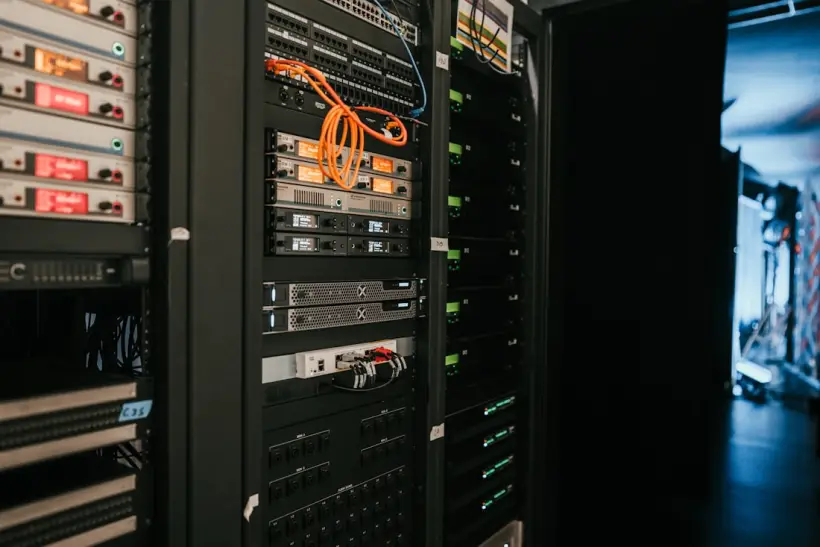
AI’s binding constraint isn’t chips — it’s power, reviving nuclear as carbon-free baseload for AI data centers. Coupling the two opens new governance gaps — clashing security priorities, fragmented regulation, divergent defenses, and AI-enabled zero-day threats. The paper proposes a cross-sector architecture: coordinated cyber-physical defense, transparency, interoperable frameworks, and adaptive policy.Co-authored with a Constellation Energy cybersecurity lead.

AI privacy education & digital literacy
Who is equipped to use generative AI safely — and who is left behind? Two studies: privacy literacy among Generation Z, and integrating generative AI into digital-literacy education — measuring the human readiness layer most adoption plans assume.Hua & Wang. IEEE TPS-ISA, 2025 (invited paper). · Issues in Information Systems, forthcoming.
AI Expert Panels
Standing panels of independent domain experts that measure real AI adoption and posture — by industry, by company type. Primary panel data + insider signal + landscape reading → a defensible, quantifiedreport. Not our opinion alone — the field’s, measured. Commissioned first: you name the question, we field it.
We have fielded expert panels before — interviewing autonomous-vehicle safety experts on where AI ends and human judgment must take over. The method is proven; the standing AI Expert Panels extend it.
It is also a hub. We convene domain experts and everyday users to surface their voices on the questions no single company should answer alone — governance, fairness, the AI divide, and the human and environmental cost. We cannot solve these grand challenges; we can make sure the right people are heard. Frontier foundational-model builders race on the technical layers — our Panels focus on integration, impact, governance, and humanity.
Commission a study →Applied briefs for decision-makers
Practitioner white papers that turn our research into decisions — focused on a specific industry or question.
AI-Program Index
Which “AI” degrees and certificates actually teach AI — real compute, real data — and which are a textbook with a hot label. Evidence for students and parents paying the tuition.